San Guillermo National Park (San Juan, Argentina): complete guide and recommendations for your visit
Destination guide · Updated November 2026 · By Centinela Explora
In a nutshell
San Guillermo National Park is in northern San Juan, Argentina, in the Iglesia department, at an average altitude of almost 4,000 meters. It is one of the least visited parks in Argentina: you enter from Rodeo, only by 4x4 and accompanied by a guide authorized by the National Parks Administration, with prior authorization from the park office. Inside, you sleep at the Agua del Godo refuge and explore circuits across the puna, with guanacos, vicuñas, mountain viscachas and foxes. The best seasons are autumn and spring; in summer, rain and snowmelt can cut off access.

Quick facts
| Location | Northern San Juan, Argentina, Iglesia department |
|---|---|
| Gateway | Rodeo, about 200 km from the city of San Juan |
| Area | 166,000 hectares |
| Altitude | Almost 4,000 m on average |
| How to visit | By 4x4 with a National Parks–authorized guide, with park office authorization |
| Where to stay | Agua del Godo refuge (beds with mattresses; bring a sleeping bag) |
| Best season | Autumn and spring |
| Entry | Free |
| Communication | No cell signal; only satellite internet or VHF radio |
What is San Guillermo National Park?
It is a national park created in 1998 that protects 166,000 hectares of high Andes, puna and scrubland in northern San Juan. Since 1980 it has been part of the San Guillermo Biosphere Reserve, the first biosphere reserve designated in Argentina. It protects the largest vicuña population in the southern part of their range, high-altitude wetlands (vegas) and archaeological sites ranging from prehistoric settlements to Inca structures.
How do you get there?
The gateway is Rodeo, the main town of the Iglesia department, about 200 km from the city of San Juan via routes 40, 436, 149 and 150. The park office (Intendencia) is in Rodeo.
From there, you enter the park on mountain tracks that can only be driven in a 4x4.
Can you go on your own?
Not entirely. To enter the park it is mandatory to go with a guide authorized by the National Parks Administration, who stays with visitors at all times, and the park office must authorize your entry before the trip. The office is in Rodeo and is open Monday to Friday, 7 am to 2 pm.
What are the health requirements?
Because of the altitude and isolation, visitors must have the relevant medical check-ups and submit the park's health form and medical certificate for entry and activities (Ficha de salud y certificación médica para el ingreso y desarrollo de actividades). Some people may face restrictions or need more thorough tests, for example people with heart conditions or pregnant women. If in doubt, check with the park office before planning your trip.
Where do you stay?
At the Agua del Godo refuge, inside the park. It has beds with mattresses, but you need to bring a sleeping bag. It is also the starting point of the circuits.
It is a free, shared visitor refuge, so there are a few rules so everyone can use it equally:
- Power is solar: turn off lights you are not using and only plug in phone and camera chargers. Electric kettles, hair dryers and other heating appliances are not allowed. If in doubt, ask the park rangers.
- Gas comes in canisters: turn off the burners when not in use. If the canister runs out, let the ranger know so they can replace it.
- When you leave, leave the refuge as tidy and clean as you found it, and take your waste with you.
What can you explore?

The circuits start at the Agua del Godo refuge and are done with the guide:
- Punto Panorámico circuit: north of the refuge, to a viewpoint at about 3,700 meters over the Llano de los Leones, the large plain where vicuñas live. From there you can see Cerro Imán, and it is a good area to look for vicuñas, guanacos and condors.
- Caserones circuit: south of the refuge, at the foot of Cerro Potosí, to the Caserones wetland. It passes a granite outcrop, the La Cueva stream and old corrals where walking is allowed.
What wildlife can you see?
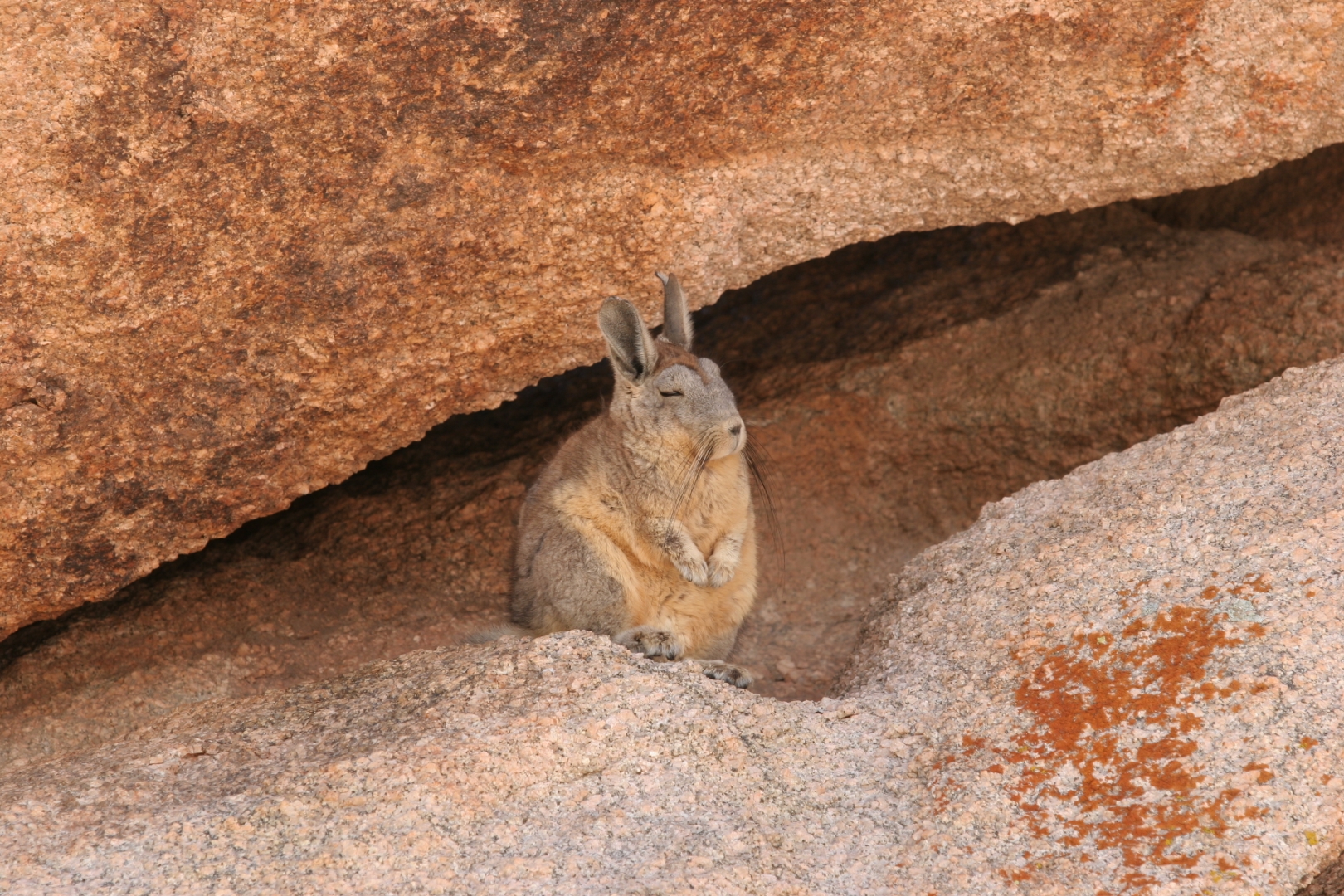
Vicuñas are the park's symbol, but their population is recovering from a mange outbreak and they are not always seen. On our trip we saw:
- Guanacos.
- Mountain viscachas (chinchillones), a puna rodent that blends into the rocks.
- Foxes.
- Puma tracks, though not the puma itself.
We did not see vicuñas. As everywhere in the park, sightings depend on luck and patience.
When is the best time to go?
The National Parks Administration recommends autumn and spring. In summer, rain and snowmelt from the Andes can cut off the roads, and in winter it snows and is very cold. In any season, access depends on road conditions: check with the park office before traveling.
We went once, in March, and luckily got in without problems.
How do you avoid altitude sickness?
With an average altitude of almost 4,000 meters, altitude sickness is possible. Our recommendations:
- Sip water throughout the day.
- Avoid alcohol.
- Avoid heavy meals.
- What works best for us is Alikal (an Argentine over-the-counter remedy). If you take medication or have doubts, check with your doctor first.
What clothes should you bring?
The climate is cold and dry, with winds that can exceed 120 km/h and up to 35 °C difference between day and night. The best approach is layers, with options for each situation:
- For the wind: a windbreaker.
- For the sun: sunscreen, sunglasses, a hat and clothing with UV protection.
- For the cold: warm clothes for the night and a sleeping bag for the refuge.
Is there cell signal or internet?
There is no cell signal. The only way to communicate is via satellite internet (such as Starlink) or VHF radio. Let your family know before you go in that you will be out of contact for several days.
What else can you visit in the area?
- Cuesta del Viento reservoir: near Rodeo, a reservoir surrounded by mountains, lovely to visit.
- El Leoncito National Park: a few hours' drive away, with trails and astronomical observatories. It can be combined in the same trip. We cover it in our Arroyo Turquesa and El Leoncito guide.
- Ischigualasto and Talampaya: if you travel by car, they can also be added to the route.
If you want to travel with everything organized
If you want to travel with everything organized, check out our group departures.