
Talampaya National Park
Where is Talampaya National Park? A Vast Space Unique Environments Climate Flora Fauna History Highlighted Trails
Located in the northwest of Argentina, in the province of La Rioja, the park is near the town of Villa Unión.
With over 213,000 hectares of protected land, Talampaya is a unique place that combines stunning landscapes with extraordinary natural and cultural value.
Famous for its internationally renowned red cliffs, the park hosts surprising biodiversity adapted to the desert environment of the Monte de Sierras and Bolsones ecoregion.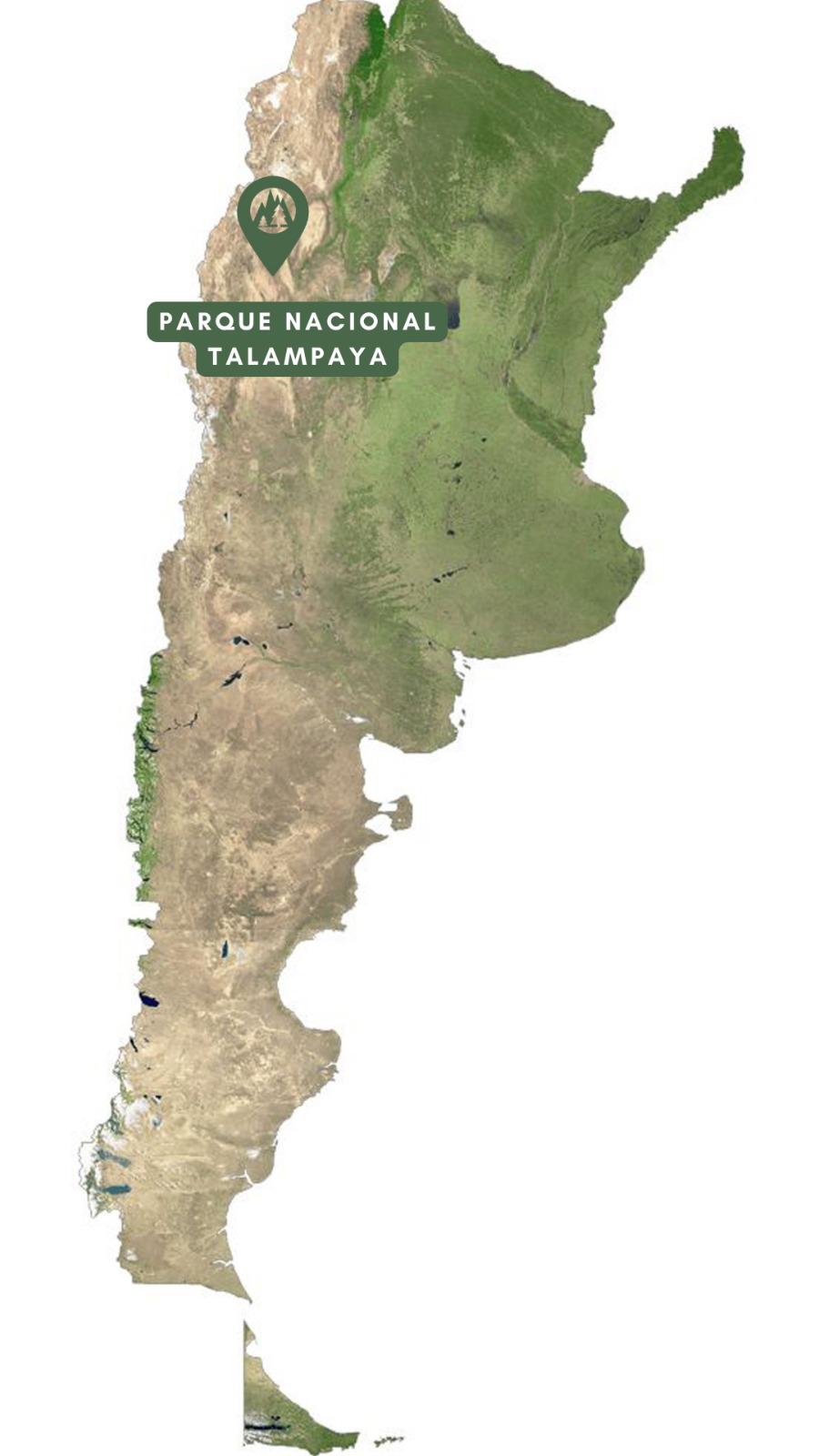
With a warm and arid climate, Talampaya experiences large daily temperature variations and intense solar radiation. Summers can exceed 40°C, while winter temperatures can drop below -7°C.
Best Time to Visit:
The park can be visited year-round, but summer rains (December to March) may disrupt activities. Easter and winter holidays are peak visitor seasons.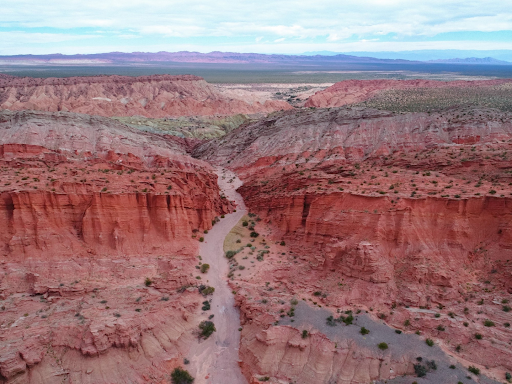
The vegetation includes omnipresent jarillas, cacti, carob trees, retamos, and the peculiar green-barked tree known as brea.
Current fauna includes mountain foxes, guanacos, terrestrial turtles, and birds such as condors and peregrine falcons. Additionally, the park preserves significant fossils, including species from the Triassic period, such as Lagosuchus talampayensis, a pre-dinosaur.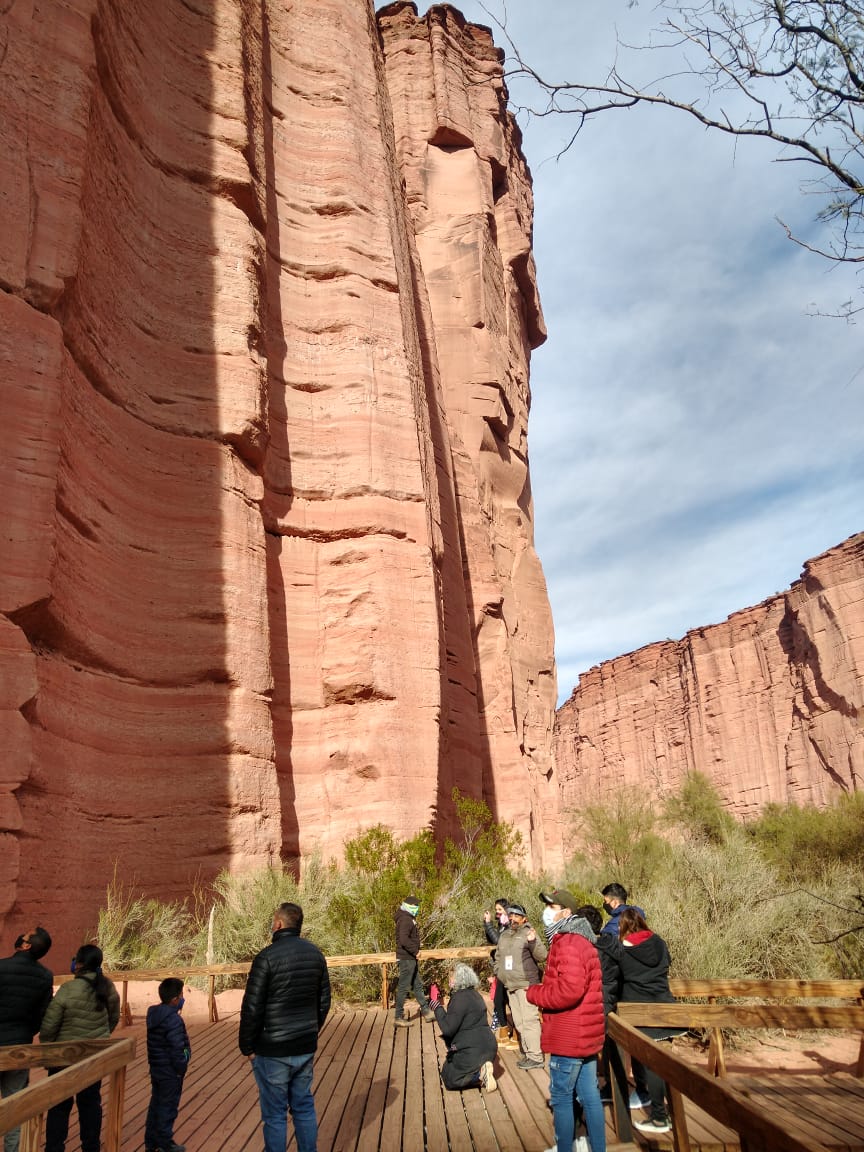
Declared a Provincial Park in 1975, Talampaya was designated a National Park in 1997 to protect its invaluable paleontological and archaeological heritage. In 2000, UNESCO declared it a Natural World Heritage Site alongside Ischigualasto Provincial Park, solidifying its international significance.
Triassic Trail: Features replicas of dinosaurs like the Riojasaurus along a self-guided 250-meter path.
Don Eduardo Ravine: A 3-hour hike through dry riverbeds and rocky passages ending at the "Gothic Labyrinth."
Lost City: A vehicle tour combined with a mid-distance hike through rocky labyrinths resembling ancient ruins. Duration: 3:30 hours.
Rainbow Canyon: A short walk through sediments of vibrant colors that reveal the geological history of the Triassic period.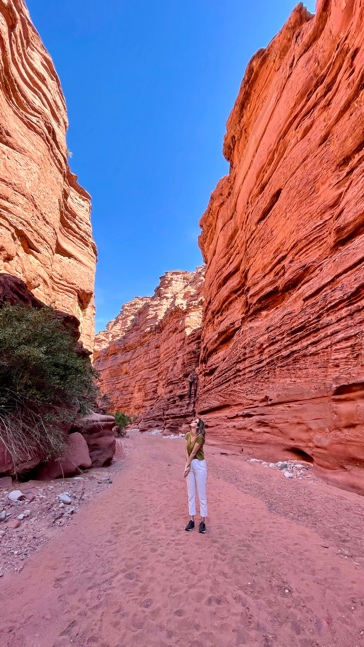
If you want to explore the park, we recommend the La Rioja - Talampaya National Park Tour