Calilegua National Park
Location Environment Climate Flora Fauna History PARK TRAILS: * LA JUNTA TRAIL: It is 8 kilometers long and is the longest trail within the Calilegua National Park. It begins in the Aguas Negras Sector and follows a forest path following the Aguas Negras stream, where a large number of animal tracks can be identified. Duration: 4 hours. Difficulty: high. * EL NEGRITO TRAIL: It is 2.7 kilometers long and runs through the montane jungle to the Negrito stream, passing through the Las Pircas historical site. It is the most difficult of all the enabled trails. Duration: 3 hours. Difficulty: high. * FOREST OF THE SKY TRAIL: It is 350 meters long and runs through a portion of the montane jungle. Duration: 10 minutes. Difficulty: low. Where is Calilegua National Park? A Protected Space Climate Flora Fauna History Trails in the Park
In the northwest of Argentina, in the province of Jujuy. It is located close to the town of Calilegua, although Libertador General San Martin is usually mentioned as the main city, due to its larger size.
Surface
The park preserves an area that amounts to over 76 thousand hectares.
It is the largest conservation area in the Yungas ecoregion. It includes sectors with Chaco forests, at 200 meters above sea level, and different jungle and wooded environments until reaching the high grasslands of the hills.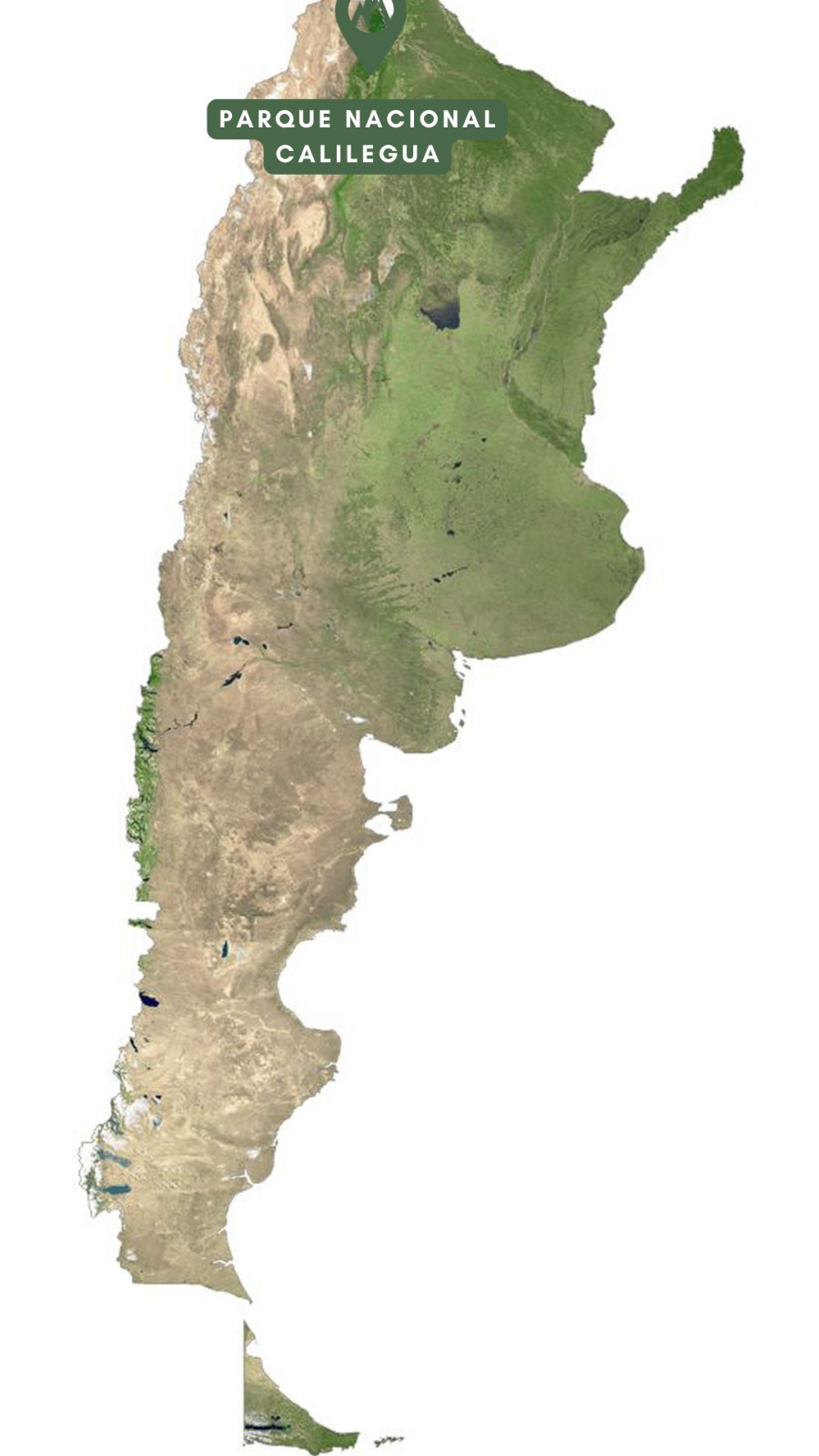
The climate is subtropical mountainous with a dry winter season. Average temperatures range from 28ºC in summer to 17ºC in winter; Absolute maximum records of 40ºC indicate hot summers. Precipitation is 1800 mm annually, concentrated during the summer months. During the winter period, snowfall is common on the mountain peaks.
Best season to visit the Park: Due to the intense summer rainfall, it is advisable to visit the park between the months of April and November.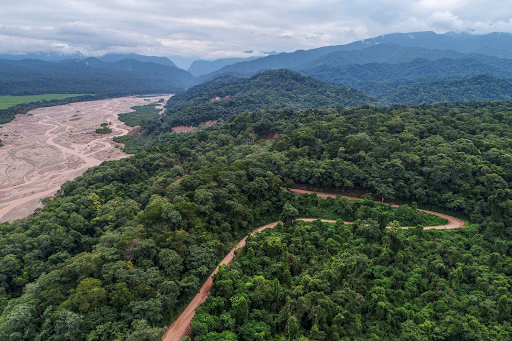
Calilegua exhibits notable biodiversity, characteristic of jungle environments. In the Park, 123 species of trees were recorded, 77 of ferns, and to them we must add countless vines, orchids, shrubs and bromeliads among the plants and the numerous forms of insects and other invertebrates that populate these jungles and forests.
All this diversity is distributed on different floors, caused by differences in height, temperature, and humidity. In this way, it is possible to recognize, ascending from the Chaco plain - about 200 meters above sea level - the transitional or foothill jungle; the montane jungle, the montane forest, the montane or cloud grassland and the high Andean meadows.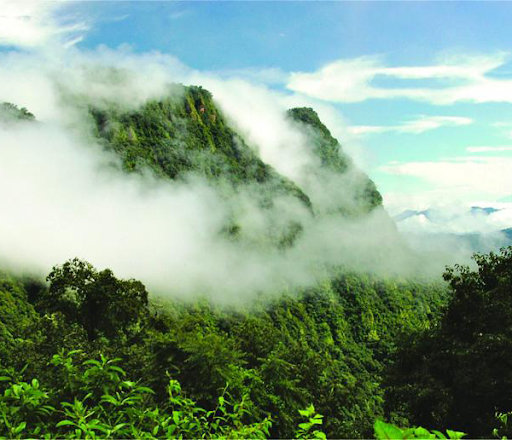
As for its fauna, about 120 mammals and 350 birds have been recorded. Many of the species present are at risk of extinction, such as the taruca or northern huemul, the jaguar and the poma eagle. Others constitute significant rarities such as the marsupial frog and the surucuá aurora, a bird related to the Central American quetzal. There are also red squirrels, capuchin monkeys, corzuelas, mountain foxes and the coendú, the local porcupine.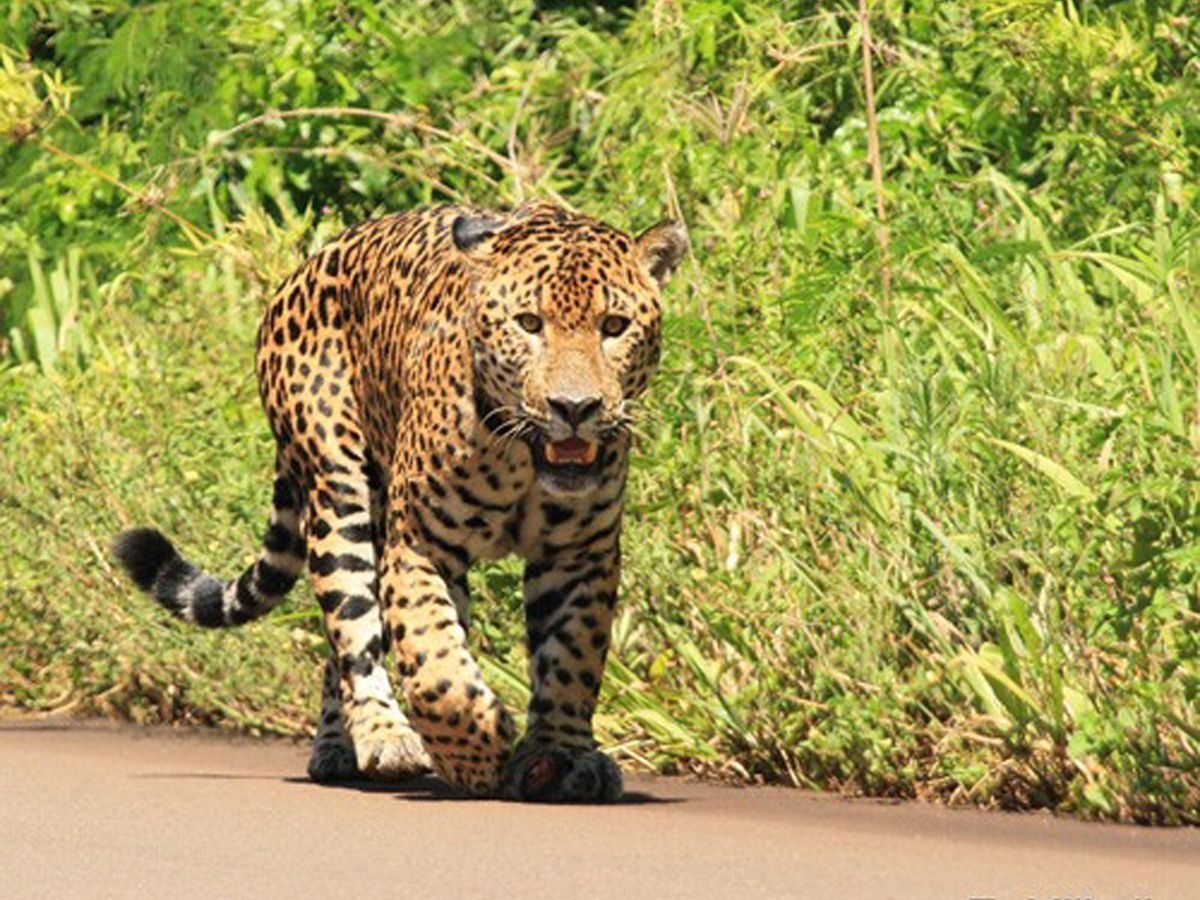
The Ledesma company is one of the largest in the country. Its main activity was the production of sugar, although over time it has diversified. By 1979, the company had a debt with the State for unpaid taxes. Consequently, he proposed the donation of the lands he owned, in order to compensate for that debt. At the same time, the creation of a National Park in that sector guarantees the company the conservation of the springs of the basins that supply the productive fields that are located at the foot of the mountain range. Of course, most of them were from the company in question.
The Park has 11 trails among which stand out
IF YOU WANT TO KNOW CALILEGUA, WE RECOMMEND THE NATIONAL PARKS TOUR OF NORTHWEST ARGENTINE
Located in northwestern Argentina, in Jujuy, near the towns of Calilegua and Libertador General San Martín.
This park spans 76,000 hectares and is the largest conservation area in the Yungas region, with environments ranging from Chaco forests to high-altitude grasslands.
With a subtropical mountain climate, the park experiences temperatures ranging from 28°C in summer to 17°C in winter. Rainfall is concentrated in summer, and the best time to visit is between April and November.
The park's biodiversity includes 123 tree species and 77 fern species, along with orchids, vines, and bromeliads. Vegetation varies with altitude and humidity, from lowland forests to Andean grasslands.
The park is home to 120 mammals and 350 bird species, including endangered animals like the taruca, jaguar, and crowned eagle. Other residents include red squirrels, capuchin monkeys, and brocket deer.
Established in 1979, this park was created thanks to a land donation by the Ledesma company, ensuring the protection of critical water basins for the region.
La Junta: 8 km round trip in 4 hours. High difficulty.
El Negrito: 2.7 km to the Negrito stream. Duration: 3 hours. High difficulty.
Bosque del Cielo: An easy 350-meter trail through montane forest. Duration: 10 minutes.
If you want to explore Calilegua, we recommend the Northwest Argentina National Parks Tour