
When to Visit the Pantanal and How to See Jaguars: A Complete Guide from Argentina
The Brazilian Pantanal is the best place in the world to see wild jaguars. This guide explains when to go, what to expect, and how the jaguar safari works from Argentina.
Why the Pantanal and not Africa for big cats
It's the natural question any traveler asks before choosing a destination: if you want to see a large wild cat, why the Pantanal and not Kenya or Tanzania? The answer has three parts.
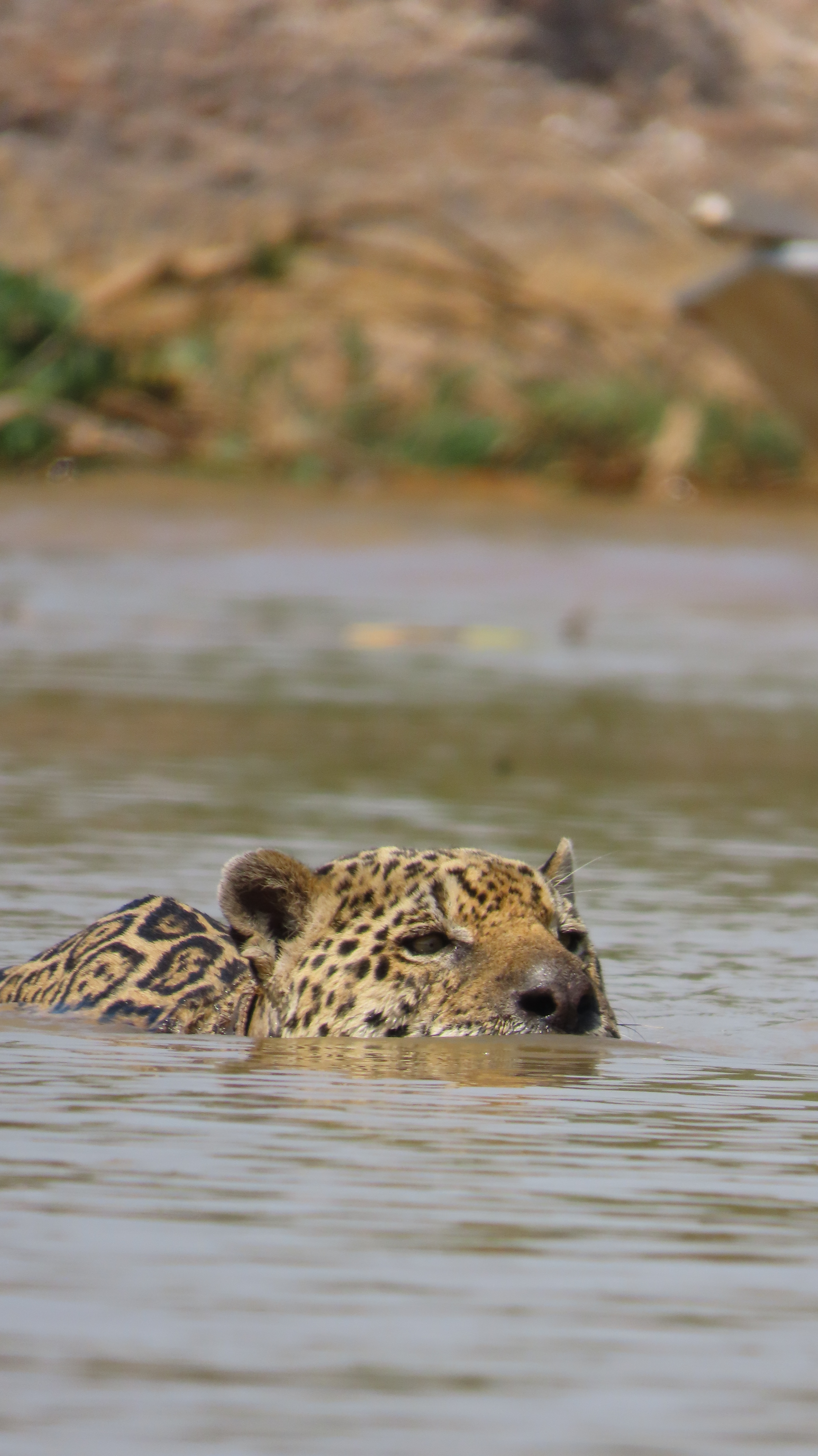
First, probability. The Pantanal has the highest jaguar density in the world — between 50 and 80 individuals per 100 km² in the Cuiabá and São Lourenço river corridor. The jaguar sighting success rate at Porto Jofre, the epicenter of Pantanal jaguar safaris, exceeds 90% during peak season. No African national park offers comparable odds for its flagship species.
Second, proximity. From Buenos Aires there are connecting flights to Cuiabá via São Paulo. Total travel time is 5 to 6 hours — compared to the 14 to 16 hours required to reach East Africa.
Third, cost. A quality Kenya or Tanzania safari runs between USD 5,000 and USD 10,000 per person. A Pantanal jaguar safari can be done for USD 2,500 to USD 3,000, with flights from Buenos Aires included.
When to visit the Pantanal: the dry season is everything
The Pantanal has two distinct seasons: the wet season (November to March) and the dry season (April to October). For jaguar sightings, the dry season is far superior — for two reasons.
The first is river level. During the dry season, water levels drop and animals concentrate along the riverbanks. Jaguars move along the river's edge in search of prey — primarily capybaras and caimans — and become much more visible from the boat.
The second is vegetation. In the dry season, riverbank vegetation is lower and more open, allowing longer sightlines and better angles for observation and photography.
Within the dry season, the best months are July, August and September. Water is at its lowest, jaguars are more active during daylight hours, and photography conditions are optimal: lateral light in the morning and afternoon without the harsh heat of midday.
October is a transition month. Rains begin, river levels start to rise slowly and sightings become less predictable. It's not a bad month — but July through September is the most productive window.
Where: Porto Jofre and the São Lourenço River
The epicenter of jaguar sightings in the Pantanal is Porto Jofre, a small port at the end of the Transpantaneira road in Mato Grosso state. Boat navigation on the São Lourenço River and its tributaries operates from here.
What makes Porto Jofre unique in the world is the convergence of several factors: high jaguar density, navigable rivers, vegetation that allows observation from the water, and a local community with decades of experience developing responsible wildlife tourism. Local guides know the territory of each individual jaguar and can anticipate the most likely locations.
The reference accommodation is Hotel Santa Rosa, located directly on the river in Porto Jofre. Boat departures go from the hotel's own dock, at dawn and late afternoon — the two periods of highest jaguar activity.
How the jaguar safari works
The safari takes place in slow-moving boats along the São Lourenço River. The guide reads signs: tracks on the bank, capybaras reacting, birds flying in a specific direction. When a jaguar is located resting or moving along the shore, the boat approaches slowly to an observation distance — usually between 10 and 30 meters.
Pantanal jaguars are habituated to boat presence and rarely flee. It's possible to observe them for several minutes — sometimes over an hour — as they move, rest, drink or hunt.
Departures are in small groups — usually 4 to 6 people per boat — to minimize impact and allow movement flexibility. The guide and boat driver work as a team and communicate with other vessels by radio to share sighting information.
What else can be seen in the Pantanal
The jaguar is the star, but the Pantanal's supporting cast is extraordinary. During navigation and the drive along the Transpantaneira, common sightings include:
- Giant river otter: lives in family groups and is very active during the day. Close encounters from the boat are frequent.
- Yacaré caiman: in very high densities along the river. Along with the capybara, it is the jaguar's main prey.
- Capybara: the world's largest rodent, abundant along every riverbank.
- Jabiru stork: the largest stork in the Americas, symbol of the Pantanal.
- Red and blue-and-yellow macaws: flying in pairs over the river.
- Over 650 bird species: the Pantanal is one of the world's premier birdwatching destinations.
The Transpantaneira road itself — the dirt track that crosses the northern Pantanal — offers continuous wildlife sightings during transfers: caimans, capybaras, iguanas, wading birds and occasionally tapirs and giant anteaters.
Chapada dos Guimarães: the ideal complement
Three hours from Porto Jofre, Chapada dos Guimarães is a national park of red sandstone plateaus, waterfalls and Cerrado birdlife — a completely different ecosystem from the Pantanal. Combining two days in the Chapada with the jaguar safari allows travelers to experience two contrasting landscapes in a single trip.
How to get to the Pantanal from Argentina
Access is through Cuiabá, capital of Mato Grosso. From Buenos Aires there are connecting flights via São Paulo (Guarulhos) operated mainly by LATAM and Avianca. Total travel time is 5 to 6 hours.
From Cuiabá, the drive to Porto Jofre takes 4 to 5 hours along the Transpantaneira — a dirt road with over 100 wooden bridges crossing the Pantanal's canals, which is itself part of the experience.
Argentine citizens do not need a visa to enter Brazil — a valid national ID is sufficient.
Centinela Explora operates Pantanal jaguar safaris since 2025
Since 2025, Centinela Explora has organized annual departures to the Pantanal from Buenos Aires. Trips include flights from Buenos Aires, ground transfers, accommodation at Hotel Santa Rosa (Porto Jofre) and in Chapada dos Guimarães, boat safaris with specialist guides, and a bilingual naturalist guide throughout the journey.
Group size is capped at 9 travelers, allowing boat schedules to be adapted to daily conditions and ensuring an experience free from the pressures of large tourist groups.